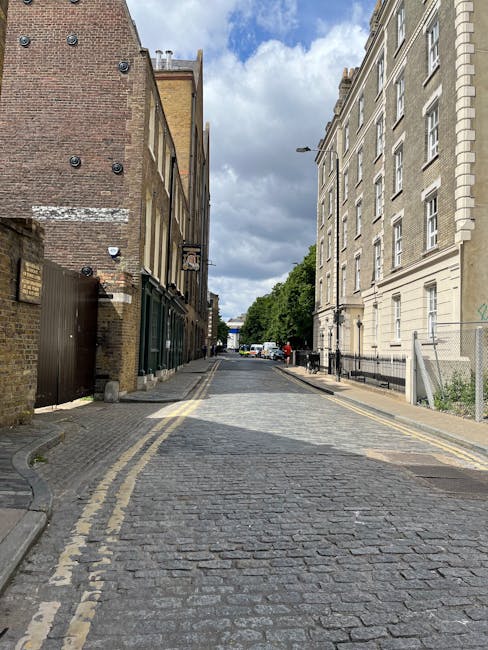
Pavement Loading in Leyton: Fines, Permits and Advice

If you are moving a sofa, fridge, office desk, or a whole flat's worth of boxes, pavement loading in Leyton can feel like one of those awkward little details that suddenly becomes the whole job. It looks simple enough: stop near the property, unload quickly, and get on with the day. But if the vehicle is on the pavement, across dropped kerbs, or causing an obstruction, the wrong setup can lead to fines, complaints, or a very stressful knock-on effect for your move.
This guide explains Pavement Loading in Leyton: Fines, Permits and Advice in plain English. You will learn when loading on the pavement may be risky, why permits and parking controls matter, what councils and enforcement officers usually look for, and how to plan a safer, smoother move. We will also cover practical advice for home and business moves, plus a checklist you can use before the van arrives.
Quick summary: if you want to load legally and avoid trouble, plan ahead, keep the loading time as short as reasonably possible, and make sure the driver knows exactly where they can stop. It sounds obvious. In practice, it is where many moves go sideways.
Why Pavement Loading in Leyton: Fines, Permits and Advice Matters
Pavement loading matters because it sits at the point where convenience, road safety, and local enforcement all meet. If a van parks too long, blocks a footway, or forces pedestrians into the road, the issue stops being a moving task and becomes a public-safety problem. That is why fines can happen, even when the driver only meant to be there for a few minutes.
Leyton is busy. Streets can be tight, traffic can build quickly, and parking space is often limited. That combination makes loading and unloading more sensitive than people expect. You may be handling a narrow residential road, a busy high street, or a shared access point where neighbours, delivery drivers, cyclists, and pedestrians all need room to pass. Let's face it, a van with a mattress half-out the back is not everyone's favourite thing to navigate around.
There is also a difference between what feels practical and what is actually allowed. A short stop may be acceptable in one setting and a penalty risk in another. A loading bay, dropped kerb, or private forecourt might help, but only if the stop is properly planned and does not breach parking restrictions or create a hazard. That is where careful advice pays off.
For local residents and businesses, getting this right saves time, money, and a fair bit of stress. It also helps protect your belongings. A rushed unload on a narrow pavement is where corners get bumped, packaging tears, and people end up carrying heavy items a lot farther than expected. Not ideal, really.
How Pavement Loading in Leyton: Fines, Permits and Advice Works
At its simplest, pavement loading means using the vehicle and nearby footway space to load or unload items as efficiently as possible. The key point is that "efficiently" does not mean "anywhere you can squeeze in". The stopping location, the duration, and the effect on other road users all matter.
In practical terms, a driver may need to consider:
- whether stopping on the road is permitted at that location;
- whether any kerb markings, signs, or time restrictions apply;
- whether the vehicle is partly or fully on the pavement;
- whether pedestrians can still pass safely;
- whether the vehicle is likely to trigger enforcement if left unattended.
Permits come into the picture when a move needs a controlled stop in an area with restrictions. Depending on the street and the circumstances, the driver may need to use a loading bay, a suspension, or another form of parking arrangement. The exact requirements can vary, so it is sensible to check the local rules before the move day rather than relying on assumptions. One wrong guess, and suddenly your "quick stop" turns into a headache.
Fines usually happen because of one of three problems: the vehicle is parked where it should not be, the loading activity takes longer than allowed, or the stop blocks access for others. Sometimes people assume that having the hazard lights on is enough. It usually is not. Hazard lights are a warning, not a legal pass.
Good advice is mostly about planning the sequence. Park where the vehicle has the best legal chance of remaining stationary, bring the right people to the front door at the right time, and keep the route clear from van to property. If you have a long carry, extra hands, or fragile items, say so early. A decent moving plan can turn a messy street into a manageable one.
Key Benefits and Practical Advantages
Handling pavement loading properly is not just about avoiding penalties. There are some very real benefits, especially in places where parking is awkward and time is tight.
- Lower risk of fines: good parking choices reduce the chance of enforcement action.
- Safer moving: clear access means fewer trips over uneven ground, kerbs, or crowded pavements.
- Faster turnaround: short, organised loading keeps the vehicle moving and helps with tight schedules.
- Less damage: shorter carries and better positioning reduce the chance of scuffs, drops, and strain on heavy items.
- Better neighbour relations: a controlled, tidy move is less likely to annoy residents or businesses nearby.
- Less wasted labour: crews spend less time improvising and more time getting the job done.
There is another benefit that people often overlook: confidence. When you know the plan is lawful and sensible, the whole move feels calmer. You are not peering through the window every thirty seconds wondering whether a ticket has been issued. You can focus on the boxes, the furniture, and the bits that actually need your attention.
If you are comparing moving help, it is also worth thinking about the type of vehicle and the service setup. A well-organised man with van service can be a very practical option for smaller moves, while bigger or more complex jobs may need removal services with a broader team and a more structured loading plan.
Who This Is For and When It Makes Sense
This topic is relevant for more people than you might think. If you are moving anything bulky or time-sensitive, pavement loading concerns can come up fast.
You are likely to need this guidance if you are:
- moving home from a flat, maisonette, or terraced house with limited parking;
- delivering or collecting furniture in Leyton;
- relocating a small office or studio;
- moving archive boxes, stock, or equipment for a business;
- coordinating a student move with multiple trips and limited time;
- arranging a man and van job where the vehicle must stop close to the door;
- using a larger van or truck and trying to avoid unnecessary walking distance.
It makes sense whenever the building frontage, road layout, or parking restrictions make loading less straightforward. If the only place to stop is awkward, cramped, or close to a junction, you should assume that the move needs more planning, not less. The same goes for wet weather, poor lighting, or peak traffic times. A damp pavement at dusk can turn a simple carry into a clumsy shuffle very quickly.
For household moves, the risk is often underestimating how many trips are involved. For commercial moves, the bigger issue is usually timing. Office staff still need access, clients still need to get past, and the van cannot sit in the road forever. If the move is business-critical, a service such as office removals or commercial moves can help organise the vehicle, people, and sequence more cleanly.
Step-by-Step Guidance
1. Check the street and the access point first
Before move day, look at where the vehicle is most likely to stop. Ask yourself: can a van safely pause without blocking crossings, driveways, or traffic? Is there enough room for doors to open and items to be lifted out without forcing people into the road?
If the route from van to entrance is long, steep, or cluttered, say so early. A five-minute loading job can become a twenty-minute one if the actual carry is far longer than anyone expected.
2. Identify any loading restrictions
Look out for bays, double yellow lines, kerb markings, or time-based rules. You do not need to memorise every detail, but you do need to spot the obvious restrictions and plan around them. If anything is unclear, treat it as a risk rather than hoping for the best.
3. Decide whether a permit or special arrangement is needed
Some moves can be managed with careful timing. Others need a formal parking or loading arrangement. If the location is tight, busy, or repeatedly enforced, it is better to check ahead than to assume a short stop will be tolerated. That one bit of planning can save the whole day.
4. Prepare the property side
Make sure the doorway, hallway, lift, stairwell, or loading path is ready. Clear loose mats, open internal doors, and keep pets, children, or visitors away from the route. You really do not want to be carrying a wardrobe while someone is trying to answer the doorbell.
5. Load in a sensible order
Put the most essential items near the end of the van only if they will be needed last. Heavy, awkward, or fragile items should be handled by the team that knows exactly where they are going. Keep the workflow simple. Straight in, straight out. No faffing about.
6. Keep the stop as short as possible
Loading is safer and less risky when the vehicle is not lingering. Have people ready, keys to hand, and boxes labelled. If the driver needs to move the van, make sure everyone knows why and where it is going next.
7. Document anything unusual
If the street is likely to be contentious, take a note of the access setup, the times, and any special arrangements. It is not about overcomplicating things. It is about having a record if there is later confusion.
Expert Tips for Better Results
In our experience, the smoothest local moves are the ones where people think about the loading point as carefully as they think about the boxes. That sounds obvious, but you would be surprised how often the van is planned last. A better order usually means a better day.
- Choose a realistic arrival window: early enough to avoid peak pressure, but not so early that the building is still closed or inaccessible.
- Use visible labels: room names and priority notes speed up sorting at both ends.
- Protect the route: doorframes, stair edges, and lift corners are the bits that get knocked first.
- Match the vehicle to the job: too large can be awkward, too small can mean multiple trips. Neither is fun.
- Plan for weather: rain changes grip, pace, and the risk of slipping on the pavement.
- Keep communication simple: one person coordinating is usually better than three people shouting different instructions.
A small practical detail: if you are moving on a busy weekday morning, traffic noise can drown out instructions. A quick hand signal or a clear "stop here" plan can help more than a long explanation. It is slightly old-school, but it works.
If you are looking for a broader moving package, you might also find it helpful to combine the vehicle with packing and unpacking services. That can reduce the time the van is at the kerb, which is often half the battle.
Common Mistakes to Avoid
Some errors keep cropping up because they feel harmless at the time. Then the ticket arrives, or the move gets delayed, or someone ends up carrying a heavy item a long way down the street.
- Assuming a short stop is automatically okay: time limits and local restrictions still matter.
- Blocking the pavement fully: pedestrians need a safe way through wherever possible.
- Relying on hazard lights alone: they do not cancel parking rules.
- Leaving the van unattended for too long: a quick unload can become a compliance issue if it drifts.
- Not planning the carry distance: what looks like "right outside" may be a much longer walk in reality.
- Underestimating bulky items: wardrobes, beds, and office desks need enough space and the right lifting technique.
Another common one is forgetting that one person's "fine, I'll just park here" can be another person's access problem. On a narrow Leyton street, that usually leads to tension fast. Nobody needs that on move day. Nobody.
Tools, Resources and Recommendations
You do not need a toolbox full of gadgets to manage pavement loading well, but a few simple tools and habits make life easier.
- Measuring tape: useful for checking furniture widths, stair turns, and doorway clearance.
- Box labels: make the loading order obvious.
- Protective blankets and straps: help secure items and reduce damage in transit.
- Phone camera: handy for recording access conditions, vehicle position, or pre-move issues.
- Clipboard or notes app: a simple move plan keeps everyone on the same page.
For readers comparing services, it can be helpful to review a provider's approach to safety, payment, and complaints before booking. Pages such as health and safety policy, insurance and safety, and payment and security give you a better sense of how seriously a company takes the practical side of the job.
If cost is part of your decision, take a look at pricing and quotes so you can compare what is included. Sometimes the cheapest option looks tidy on paper, but the extra loading time or lack of support makes it less good value in the real world.
Law, Compliance, Standards, or Best Practice
For pavement loading, the main thing to understand is that road and pavement use is controlled by local parking and traffic rules, and those rules can be enforced. There is no single "one-size-fits-all" solution, because the exact setup depends on the street, the markings, and the local authority's approach. If you are unsure, the safest assumption is that a stop needs to be justified, brief, and carefully managed.
Best practice is simple enough:
- do not obstruct pedestrians more than necessary;
- do not block crossings, junctions, or driveways;
- keep the vehicle positioned so loading can happen quickly and safely;
- obey any signs, time limits, or kerb markings;
- use proper manual handling techniques for heavy items;
- avoid improvising if the space looks too tight.
In real life, compliance and common sense overlap quite a lot. If the stop feels unsafe, it probably is. If people have to step into the road to pass you, that is a red flag. If the van needs to sit there for ages while everyone hunts for keys, the setup needs another look.
It is also worth remembering that the property side matters. Inside the building, employers, landlords, and occupiers all have their own responsibilities for safe access and movement. For larger jobs, especially workplaces, a structured service such as removal company support may reduce the risk of confusion and delays.
Options, Methods, or Comparison Table
Not every move needs the same approach. The right method depends on size, access, budget, and how much help you want on the day.
| Option | Best for | Pros | Watch-outs |
|---|---|---|---|
| Self-managed van hire | Small, straightforward loads | Flexible and often cost-conscious | You carry more responsibility for access and timing |
| Man and van | Flat moves, furniture, local collections | Good balance of support and simplicity | Still needs clear loading access and planning |
| Full removal service | Larger homes, offices, or multi-room moves | More structure, more hands, less stress | Usually costs more and may need more coordination |
| Truck-based move | Bigger volumes or heavier items | More space in one trip | Can be harder to position in tight streets |
If your road is narrow or enforcement is likely, the simplest vehicle is not always the best vehicle. A slightly smaller van that can stop legally and unload cleanly may save more time than a bigger truck that cannot sit comfortably anywhere. That is the bit people miss.
Case Study or Real-World Example
Here is a realistic example. A small family in Leyton was moving out of a first-floor flat on a street with limited parking. The first instinct was to park as close as possible and just "get it done". But the kerb space near the entrance was tight, and the pavement was busy with school-time foot traffic in the morning.
Instead, the move was broken into stages. The team arrived a little earlier, checked the access point, and used the safest legal stopping position available. The heaviest items were taken down first while extra hands stayed at the entrance to keep the route clear. Boxes were labelled by room, and the driver was ready to move the van if traffic built up. Nothing dramatic, just thoughtful planning.
The result? The move stayed calm. No frantic juggling. No awkward stand-offs with pedestrians. No last-minute dashes across the road because someone parked too far away. The family still had a tiring day, of course - moving is moving - but they avoided the kind of problem that tends to spoil the mood before lunch.
That is usually the difference between a move that feels controlled and one that feels like a scramble.
Practical Checklist
Use this checklist before any pavement loading job in Leyton.
- Confirm the move date and arrival window.
- Check where the vehicle is most likely to stop.
- Look for loading restrictions, signs, or kerb markings.
- Decide whether a permit, bay use, or special arrangement is needed.
- Measure bulky items and check doorway or stair clearance.
- Clear the route inside the property.
- Label boxes by room and priority.
- Assign one person to coordinate instructions.
- Prepare protection for floors, walls, and furniture.
- Plan what happens if the vehicle needs to move quickly.
- Keep the loading window as short as possible.
- Have contact details ready for the driver and key decision-maker.
Expert reminder: the best loading plan is the one that still works when the street is busier than expected, someone is running late, or the weather is slightly miserable. That is the real test.
Conclusion
Pavement loading in Leyton is one of those topics that sounds minor until it starts affecting your move. Then it becomes very important, very quickly. Fines, permit issues, blocked access, and delays are all avoidable if you plan the stop properly, understand the local setup, and keep safety at the centre of the job.
The good news is that most problems are preventable. Choose a sensible stopping point, keep the loading process tight, prepare the property, and use the right support for the size of the move. Whether you are handling a flat move, a furniture collection, or a business relocation, the same principle applies: plan the access, and the rest becomes much easier.
If you are comparing help for a move, it is worth choosing a team that understands access challenges, treats safety seriously, and is clear about the process from the start. That bit of confidence changes everything on the day. And honestly, it makes the whole thing feel a little less like a headache and a bit more like progress.
Get a free quote today and see how much you can save.
Frequently Asked Questions
What is pavement loading in Leyton?
Pavement loading in Leyton usually refers to stopping a vehicle close enough to a property to load or unload items efficiently, while still respecting local parking, access, and pedestrian safety rules.
Can you get a fine for loading on the pavement?
Yes, fines can happen if the vehicle is parked in a restricted place, blocks access, or stays longer than allowed. The risk depends on the exact street, markings, and local enforcement approach.
Do I always need a permit for loading?
Not always. Some situations can be managed through legal stopping space and sensible timing, but busier or more restricted streets may require a permit or another formal arrangement.
How long can a van stay while loading?
There is no universal answer. It depends on the local rules and the specific location. The safest approach is to keep loading as short as reasonably possible and avoid leaving the vehicle unattended.
Is hazard lighting enough to make loading legal?
No. Hazard lights can show that a vehicle is stopping briefly, but they do not override parking restrictions or make unsafe loading acceptable.
What should I do if the road is too narrow?
If the road is narrow, plan a safer stop in advance, reduce the number of trips, and make sure the carry route is clear. In some cases, using a smaller vehicle or more hands is the better choice.
Are Leyton streets especially difficult for loading?
Some streets in Leyton can be awkward because parking is limited and traffic can be busy. That does not mean loading is impossible, but it does mean planning matters more than usual.
What is the safest way to handle heavy items from the van?
Use proper lifting technique, keep the route clear, and place the heaviest items closest to the exit point so they can be moved with the least strain. If it feels too awkward, get help rather than forcing it.
Should I use a man and van or a full removal service?
For smaller moves or local collections, a man and van setup can be efficient. For larger, more complex, or more time-sensitive jobs, a fuller removal service can offer better structure and less stress.
What if the parking space disappears on the day?
Have a fallback plan. That might mean a nearby legal stopping point, a slight adjustment to the schedule, or a vehicle reposition. A move goes better when someone has already thought about the "what if".
How do I reduce the chance of complaints from neighbours?
Keep noise down, avoid blocking entrances, load quickly, and communicate clearly. A tidy, brief stop is much less likely to upset nearby residents or businesses.
Where can I learn more about the company behind this advice?
You can read more about the team on the about us page, or review the company's terms and conditions if you want a clearer picture of how bookings are handled. If you still have questions, the contact us page is the most direct next step.